Chapter 1: Introduction
Hey everyone! My name is Adam Fisher, and I am currently a Sophomore at Eastern Kentucky University. I am a student in the College of Justice and Safety focused on getting my bachelor’s degree in Occupational Health and Safety. Originally, I am from a “little big town” as I like to call it in southeast Texas called League City. Life in League City is rather interesting due to the complexity of numbers mixed with the culture of the south. Even though my town has 120,000 people living in it, it still has a small-town atmosphere. The city is flooded with people whose primary passions are fishing and living the blue-collar way of life. Currently, I am working as a Safety Specialist for a company named The Boring Company. If you haven’t heard of it, I suggest you look it up and marvel at what we are doing (Hint: We are one of Elon’s companies). I really enjoy working in the safety industry due to my past work experience. Like I said, I come from a town where blue-collar work is valued, and I was a part of that lifestyle. I was working as an industrial pipe welder in the oil refineries across the nation until I had enough with people getting hurt at work. I realized I could help people go home safely and still maintain the blue-collar way of life, which leads me here writing this blog entry about loving safety. Enough about me, lets dive into what this blog page will really be about. Due to my love of occupational safety and the wellbeing of my co-workers, I want to spend my time diving into research that will better help that mission of getting people home safely. I know as well as the next person that safety is a very specialized field and without studying it, it is almost impossible to have knowledge in. However, I hope to present research over some very complex topics in a way that makes you guys as readers feel like experts and hopefully understand the true value of a safety professional. A couple of ideas that I have flirted with researching are The Efficacy of Individual Analysis in Heavy Machinery Safety Programs as well as The Psychology Behind Building a Safety Culture. I know. Complex on the surface and very foreign without prior knowledge, though I hope to change that through the semester.
Chapter 2: Research?
In my career, research has been rather vanilla. Searching for hot words on Google or other search engines. Granted, it is an effective way to research with limited resources and connections. Though, in my pursuit of research for my ideas, I would like to consult professionals in the desired field as well as conducted analytical experiments myself. I am hoping that this leads to a better, more multifaceted research that results in a clear outcome. It also allows myself to participate in keeping an open mind and practicing the Rogerian argument. By connecting with others, debate can be engaged and in-turn allows me to exercise my brain to see other points of view. I feel that any sort of vanilla research will slowly get molded to what you want to see. Having the actual conversation with a professional leads to the growth of knowledge.
Chapter 3: Sources
This chapter will be dedicated to showing you possible sources and explaining what those sources are and where they leave us.
Blair, Earl, and Dong-Chul Seo. “Safety Training: Making the Connection to High Performance.” Professional Safety, vol. 52, no. 10, Oct. 2007, pp. 42–48.
This source is from a scholarly journal called “Profesional Safety”. It dives into going above and beyond in safety trainings. Typically, OSHA will have some sort of standards that the safety trainings have to mee and this goes into deeper consideration of how better safety trainings result in better performance. The source seems to be a very credible course and if my research is correct, was actually co-written by a professor at EKU. The only question this leaves me with is not so much a question. I somewhat wish there was an example of what they were presenting to be a better safety training.
“TD Pros See Safety Training as More Than Compliance.” TD: Talent Development, vol. 71, no. 10, Oct. 2017, p. 11.
Although a much smaller source, this source is just as valuable from a numbers perspective. This source presents quantitative data to show the % of companies meeting training compliance standards, as well as the % of companies that are going beyond the bare minimum. HINT: The numbers dont look so great for above and beyond the bare minimum. While the numbers are valuable, it leaves the question of legitimacy. There is no mention of what study the numbers were pulled from and no way to find out anything about those numbers other than that they are there.
Scace, Justin. “Gauging the Effectiveness of Safety Training: Research and Best Practices.” EHS Daily Advisor, 21 May 2020, ehsdailyadvisor.blr.com/2020/05/gauging-the-effectiveness-of-safety-training-research-and-best-practices.
This source is from the EHS Daily Advisor which is an extremely reputable source in the world of occupational health and safety. The source goes full circle in their talks about safety training. Starting with safety training standards and the basics and finishing up with the best practices for your safety training program moving forward. Once again, this leaves me wishing there was an example. With an example it would help to dive even deeper into the effectiveness of the safety trainings.
“Is Your Safety Training Program Effective? – EHS Today.” EHS Today, https://www.ehstoday.com/archive/article/21906169/is-your-safety-training-program-effective.
This is by far my favorite source I have found because it takes a complex issue and makes all of the tiny little details around that issue complex in their own right. The article is similar to the others, diving into how effective your safety training program is, but the really interesting part is that it dives into what is training and what is education. Separating the two makes a huge difference in your safety training moving forward. The question I am left with is how many other parts of the main issue could be broken down into more complex subjects like this.
“Developing Safety Management Programs – SHRM.” SHRM, https://shrm.org/ResourcesAndTools/tools-and-samples/toolkits/Pages/developingsafetymanagementprograms.aspx.
This source is an interesting one to me and actually mentioned something that every safety professional loves to hear. That would be “Employee Involvement”. That will be the key focus of this source. Employee involvement is what every safety professional strives for and it is when the employees around you get bought into the safety culture that you are building. This allows the safety professional to step back and make bigger procedural changes instead of having to be a “babysitter”. One question I am left with after quickly reading through this is how can you gauge employee involvement in a quantitative manner?
Chapter 4: Research Process?
My research process did not go how I expected it to go. As mentioned previously, I wanted to do actual field research and speak with other safety professionals to see if they had any literature published regarding the efficacy of safety training. However, due to a weird living situation for the time being (I literally live at work in the middle of nowhere) that was not entirely possible. Due to this, I had to go back to what I know and used the powerful tool known as “Google”. The sources I have found are decent. They are not exactly what I am looking for, though they do provide useful information that can be pieced together to present the argument that I am looking for. The topic is also somewhat new relatively speaking which means there is not too much data and gives me a chance to use the Rogerian argument in order to look at this topic from the employers point of view. Often, there is a disconnect between the employer and safety due to the price tag that comes with safety.
Chapter 5: Sources (Part 2)
Haight, Joel. “Cost Analysis and Budgeting of Safety and Health Training.” Hazard Prevention through Effective Safety and Health Training, edited by Brent Altemose, 2nd ed., American Society of Safety Professionals, 2013, pp. 89–103.
This source comes from a textbook that I actually use for another class of mine (Safety Training Strategies) and chapter 6 specifically dives into the money side of things. The main focus of this source will be the money side of safety trainings. That will include the cost of training, cost analysis, examples of what safety training costs would look like and much more. This will tie directly into return on investment calculations.
Edet, Ubong. “How to Measure the Effectiveness of Health and Safety Training.” HSEWatch, 29 Feb. 2020, hsewatch.com/how-to-measure-the-effectiveness-of-health-and-safety-training.
This source takes a detailed approach to explaining how to evaluate the effectiveness of health and safety training. It is a very important part to my research due to the fact that without knowing how to correctly evaluate the implementation of health and safety training (which is very difficult due to human factors) there is no way to present any sort of evidence that the safety training is effective.
Nkomo, Hloni, et al. “Effectiveness of Health and Safety Training in Reducing Occupational Injuries Among Harvesting Forestry Contractors in KwaZulu-Natal.” Workplace Health & Safety, vol. 66, no. 10, 2018, pp. 499–507. Crossref, https://doi.org/10.1177/2165079918774367.
This source is a study that was conducted in South Africa that directly relates to the previous source. In fact, even in the abstract it is mentioned that safety trainings are not evaluated. This study takes a group of 300 workers in the forestry industry and evaluates the effectiveness of their safety trainings compared to years past. The results are rather interesting.
Roux, Lance. “HOW TO EVALUATE YOUR SAFETY TRAINING PROGRAM.” SafetyPro Resources, 25 May 2020, www.safetyproresources.com/blog/how-to-evaluate-your-safety-training-program.
If you have not noticed a pattern by now with part 2 of getting sources, they have all been focused on evaluation of the safety training which is arguably the most important part of safety training outside of knowledge retention. This source gives a bit of a different look to evaluating the safety training program than the source above. It is not as detailed but leaves the safety professional with questions that they need to be answering.
Jeremy. “Is Online Safety Training Effective Enough to Use?” Safety Talk Ideas, 16 Mar. 2022, www.safetytalkideas.com/safety-training-articles/online-safety-training-effective-to-use.
This source is probably the most interesting and relevant source in terms of what I like to call “new age safety”. Much of safety training currently is done through 3rd party resources such as ClickSafety that allows you to obtain things like forklift certifications without ever getting into a forklift. This source lists many thoughts about online safety trainings and goes into detail about why those thoughts are confirmed or debunked.
Chapter 6: Relevant Images (Self Provided)
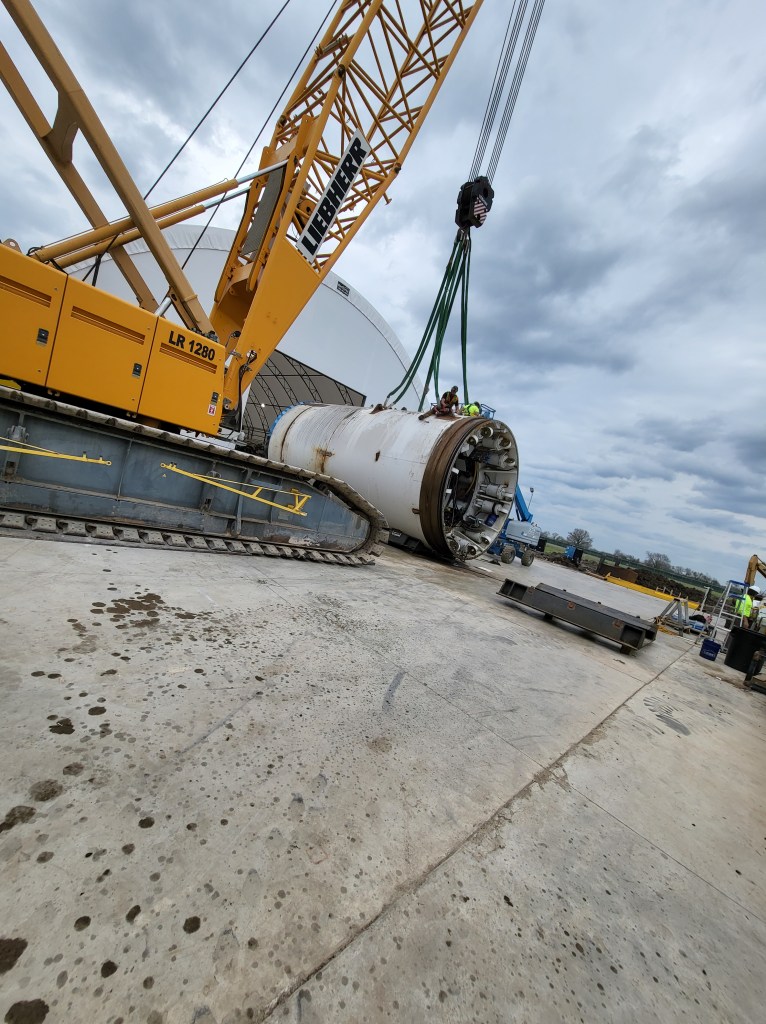
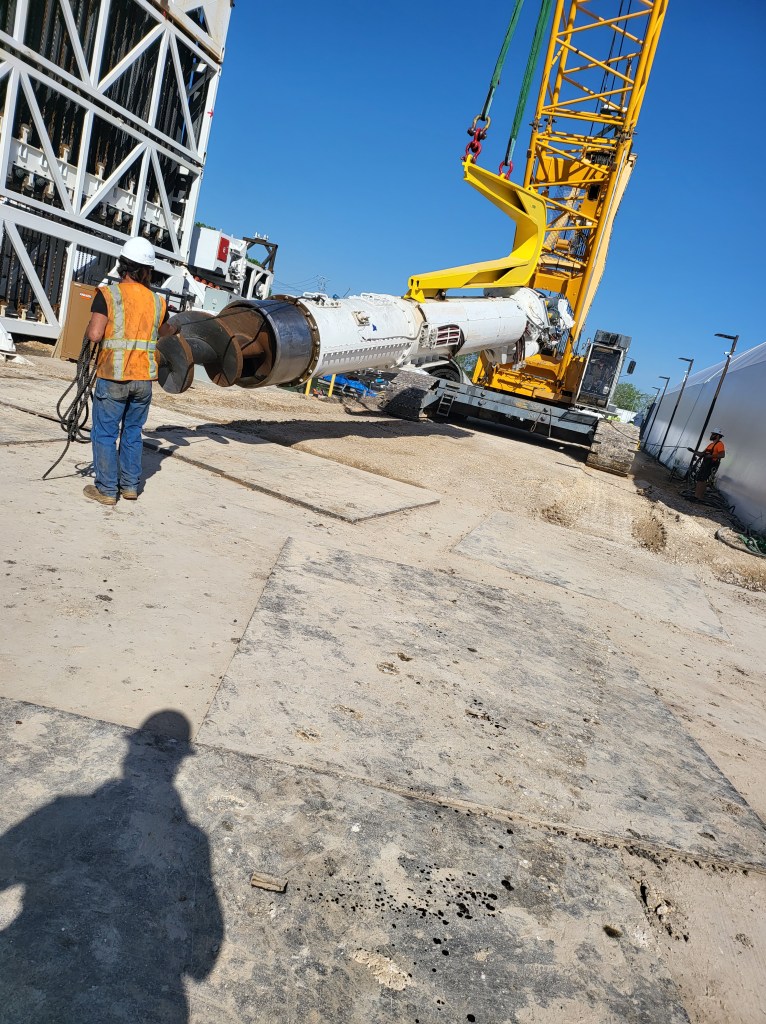
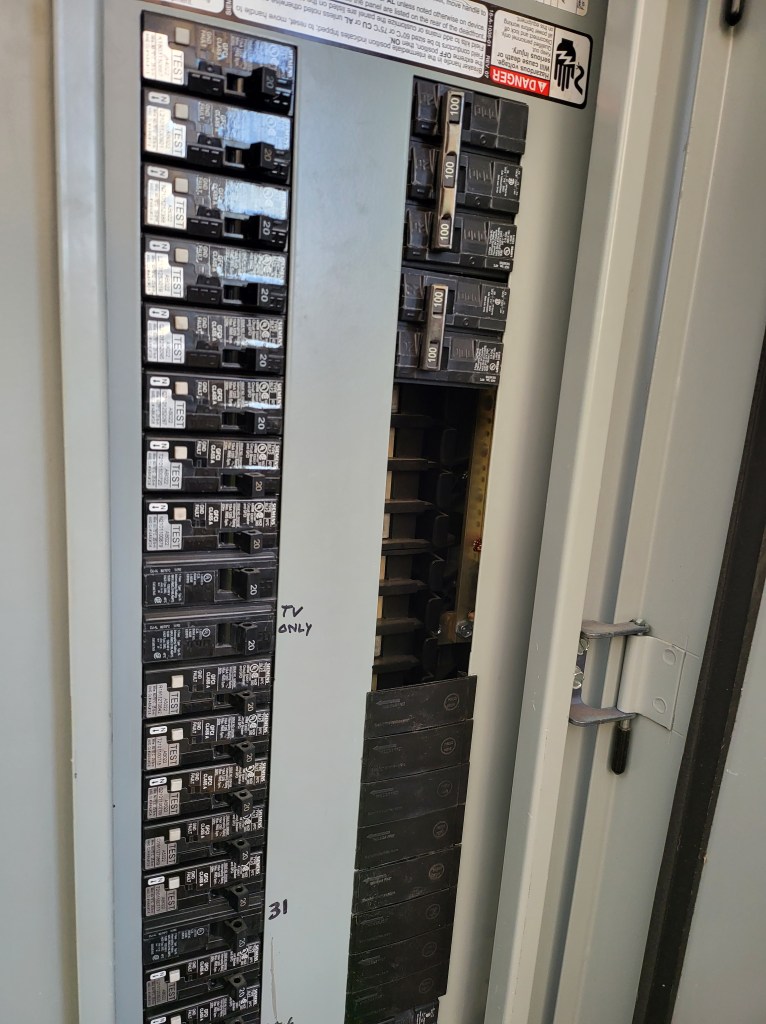
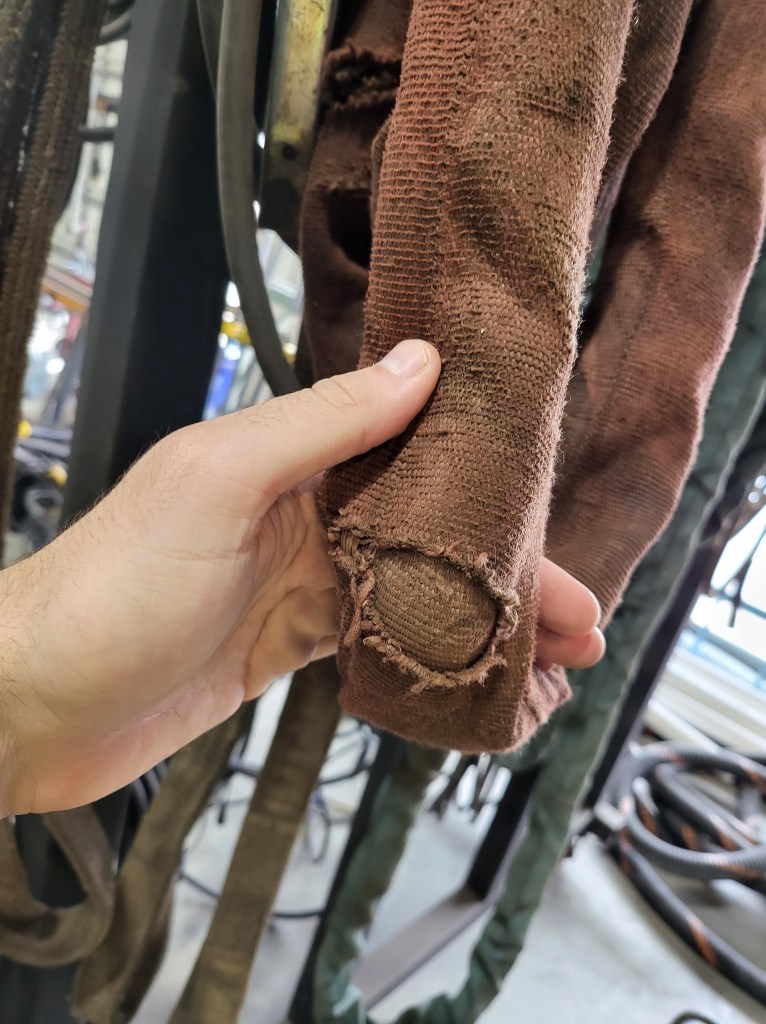
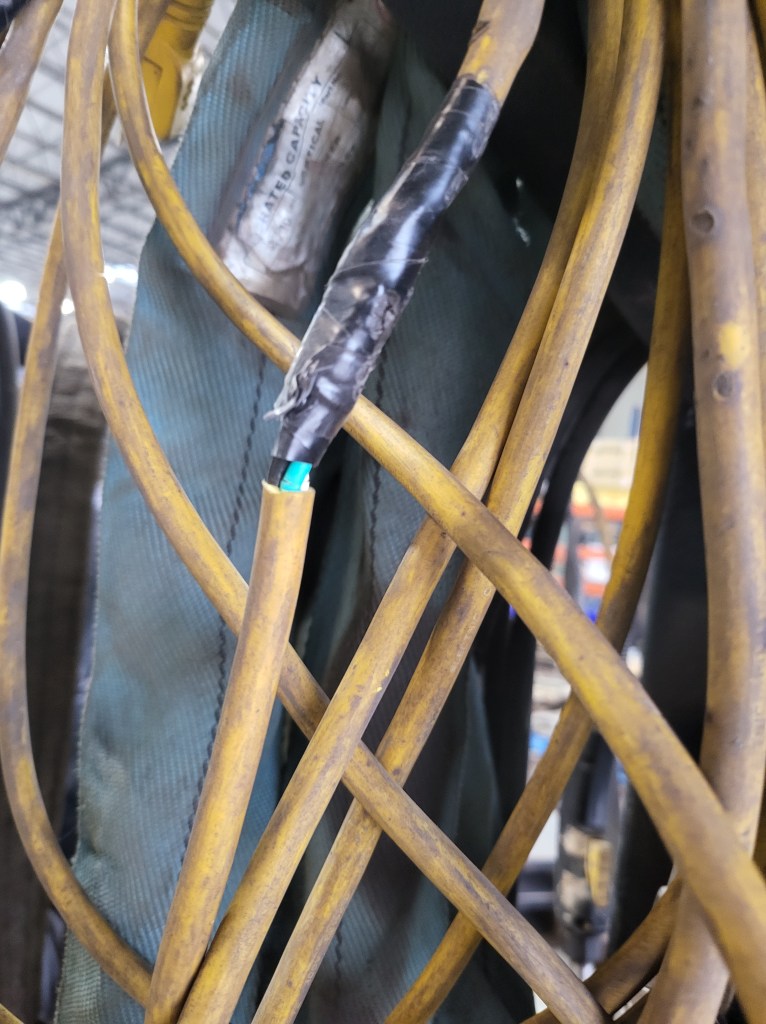
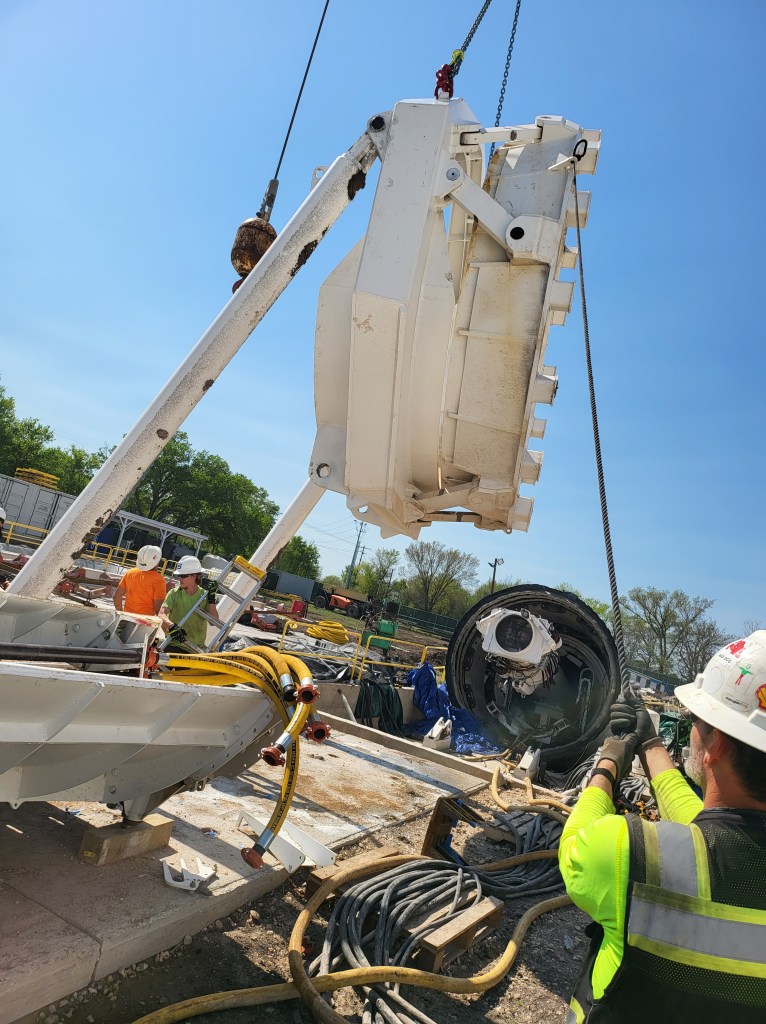
All of the following images below show why I have an interest in the effectiveness of safety training. Though the pictures to not tell the full story, they do give somewhat of a glimpse into everyday dangers faced on my jobsite. All of the pictures were hand taken by myself.




Chapter 7: Relevant Images (Resourced)
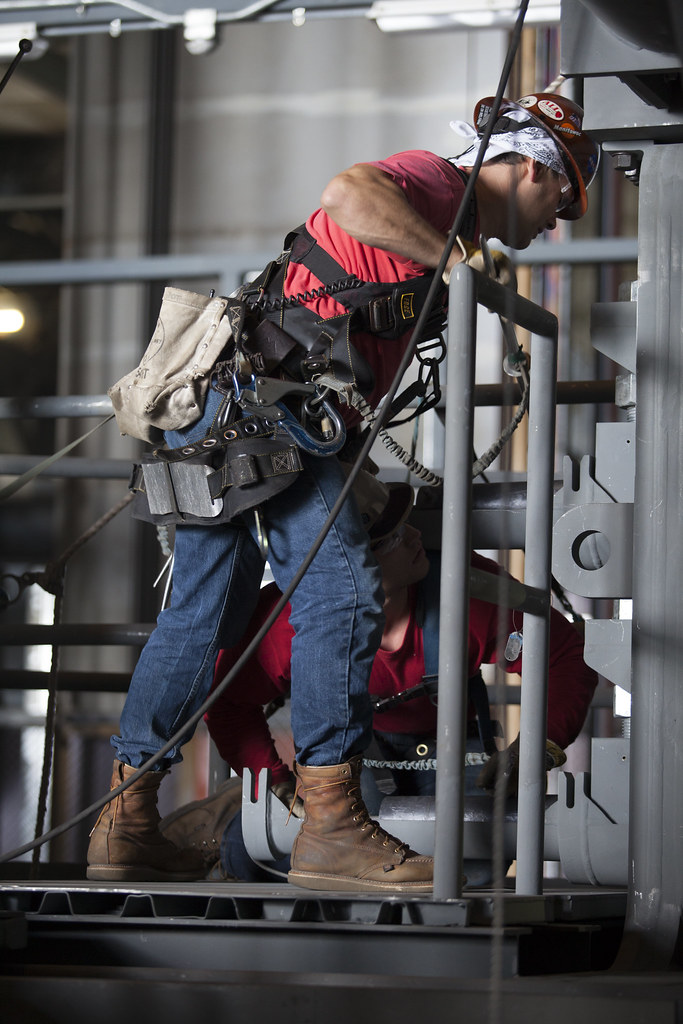
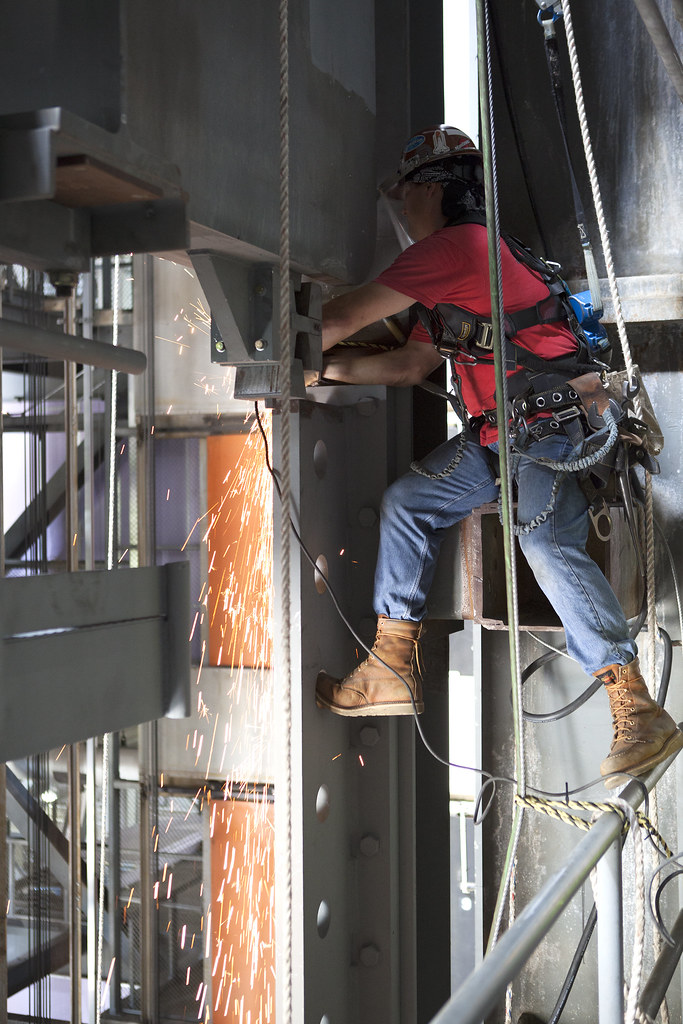
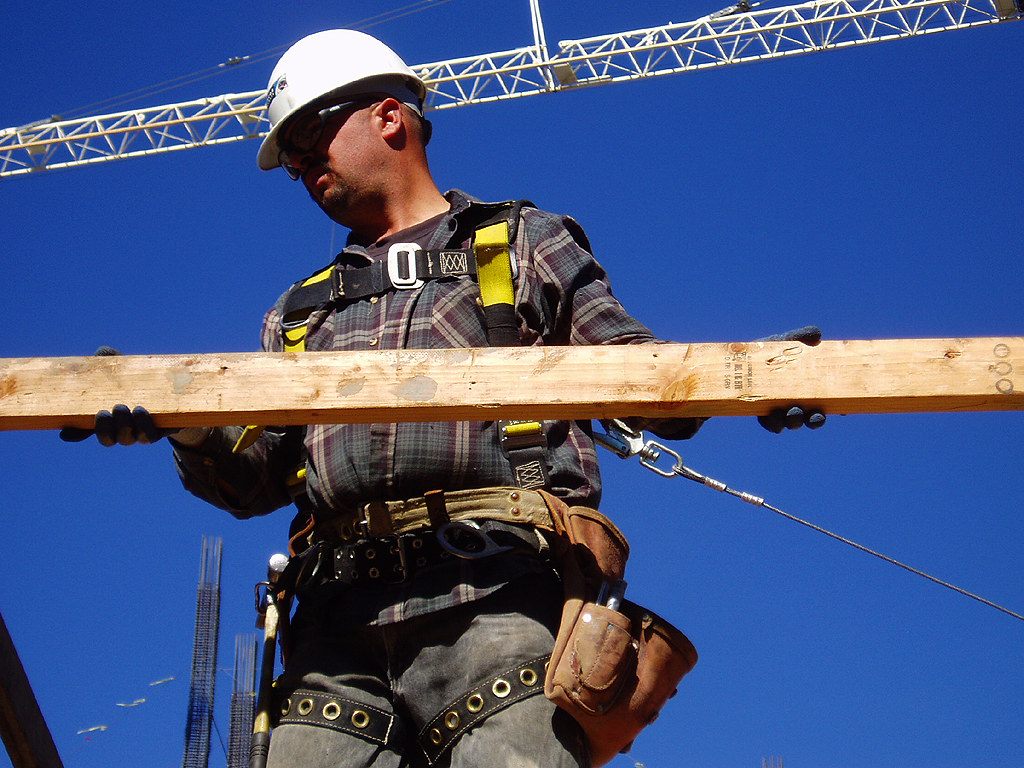
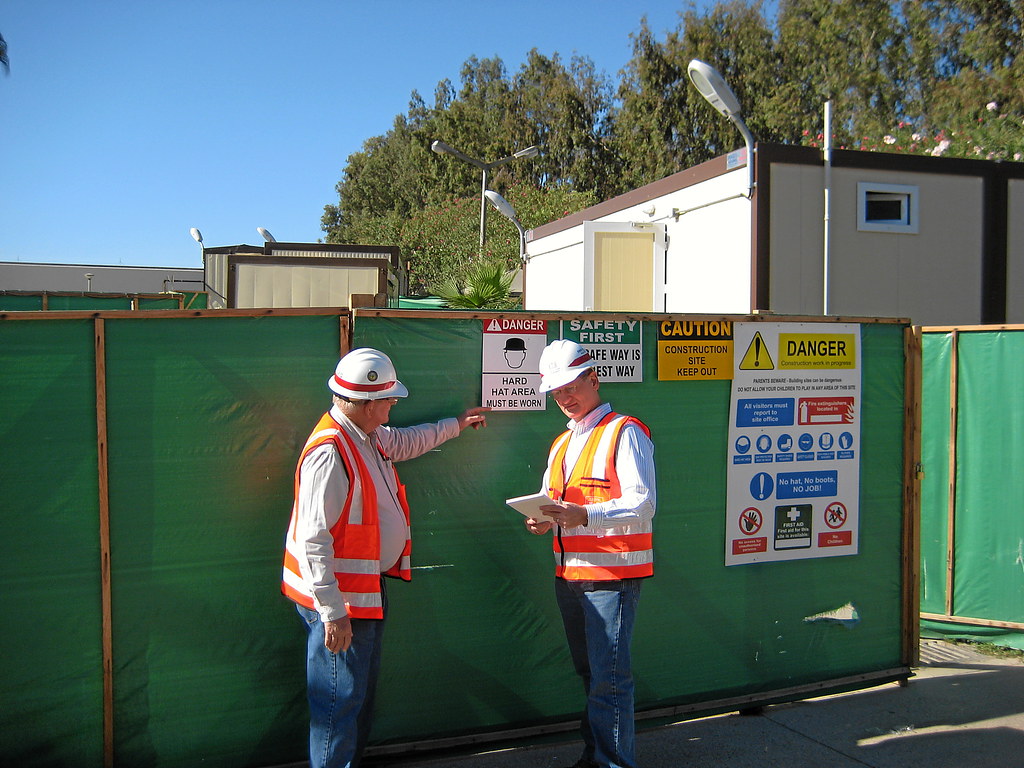
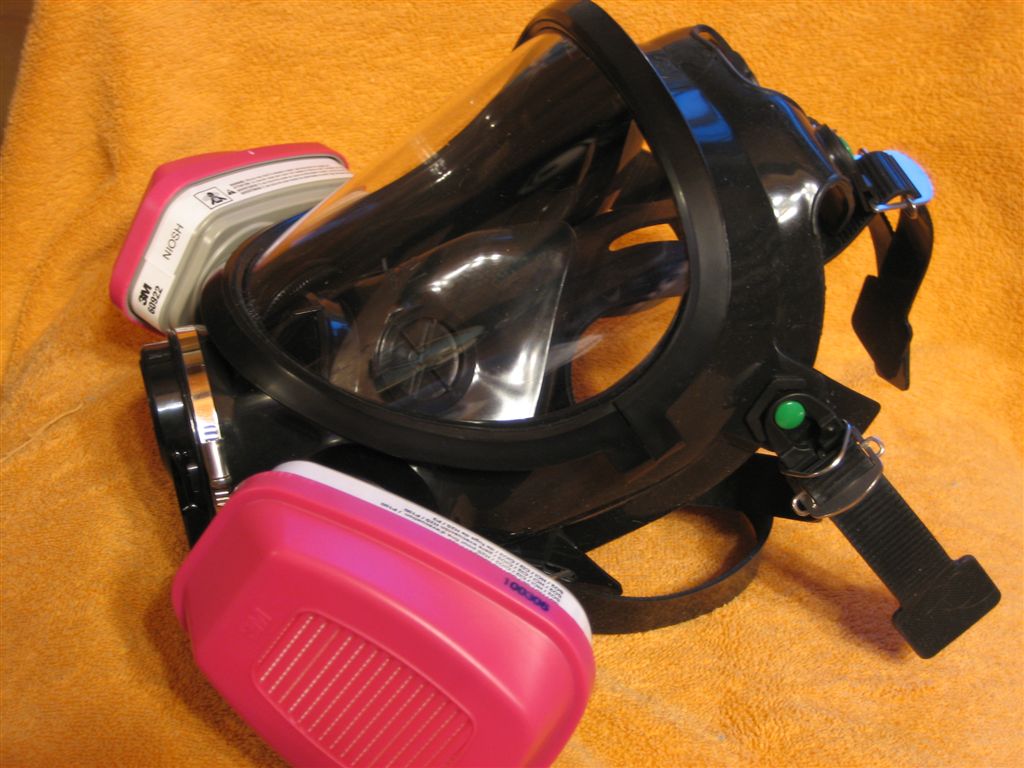
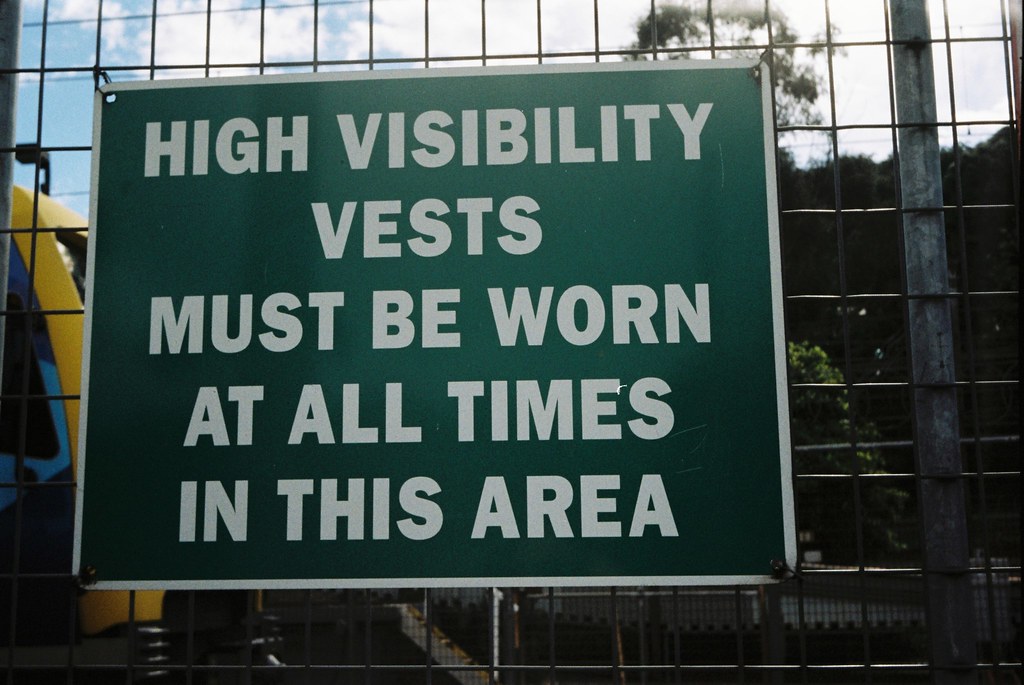
The images that are posted below are images I resourced from the creative commons. These images (unlike the ones shown above) are more focused on what work should look like if safety training is found to be effective.




Chapter 8: Argument
In the world of occupational safety, one issue is common throughout. That is the issue of safety training and how effective it is. Safety training is a fairly complex topic and not due to the fact that safety is difficult. Rather, human nature and the psychology of humans is difficult. In this day and age, it is not sufficient enough to create a safety training that hits on all the points. Safety training has a major effect on how well the company operates on a production side as well as how much money the company saves by reducing injuries and illnesses in the workplace.
Safety training is not just to protect workers though. From a company perspective, safety training is meant for one of two things. To save money and to fall within compliance of OSHA standards. In a quote from “TD Pros See Safety Training as More Than Compliance” “When asked about their top three reasons for conducting worker safety training, only 50 percent of people included “to be in compliance” as one of their selections.” The verbiage of the article does suggest that this is a low number, though when looking at a bigger picture, the 50% can be rather alarming. Scale this study up to a world wide stage and all of a sudden the “only 50%” turns into something much more. Half of the worlds companies only offering training to fall within compliance is concerning and does not send the message that they care about the effectiveness of safety training.
To sell safety training to a company, one would have to view it from their perspective. It is fairly standard for production and safety to get in the way of each other. The production perspective is that safety gets in the way of production and slows down work. Whereas the safety perspective is that production without safety will surely lead to injury or illness. In an article written by Earl Blair, he discusses 3 main reasons for hearing stories of unfortunate events leading to the death of individuals in the workplace. One of those reasons is that the safety training was “delivered well but not integrated into the workplace and thereby has no real impact on performance.” Production and safety need to work together to mitigate this issue. Proper safety training paired with proper integration into the system of the company is a recipe for going home safely and completing work in a timely manner.
To touch on the other perspective of the company, means that money has to be involved. Safety training is not cheap even when done in house. In an example calculation in a textbook titled “Hazard Prevention through Effective Safety and Health Training” it would cost a company roughly $1,009,350 over 5 years to run an in house training that only lasts 150 hours. Breaking that down into an hourly number, that would equate to $6,729. This is exactly the reason that companies are focused on compliance rather than serious and thorough safety training. It is much easier to use a premade video on the internet for free rather than sit down and develop a process that would drive the company forward.
Money is an issue when it comes to pitching good safety training, though it can be battled. Money without cause will never get approved. However, money with cause and data to back up the point, will always start a conversation. Proper safety training has been documented saving hundreds and thousands of lives over time. In South Africa there was a study over the forestry industry to compare the lost time injuries of the company before and after starting an annual safety training in 2005. In 2003 the company had 82 occupational injuries and the following year (2004) the company had 161 occupational injuries. Then comes the annual safety training in 2005. In 2005 the company reduced occupational injuries to 55 total which would become the highest recorded number all the way through 2013. In 2009 they had 23 occupational injuries. Presenting data like this to companies negates anything they could say about money. Proper safety training saves lives.
Chapter 9: References
“TD Pros See Safety Training as More Than Compliance.” TD: Talent Development, vol. 71, no. 10, Oct. 2017, p. 11.
Blair, Earl, and Dong-Chul Seo. “Safety Training: Making the Connection to High Performance.” Professional Safety, vol. 52, no. 10, Oct. 2007, pp. 42–48.
Haight, Joel. “Cost Analysis and Budgeting of Safety and Health Training.” Hazard Prevention through Effective Safety and Health Training, edited by Brent Altemose, 2nd ed., American Society of Safety Professionals, 2013, pp. 89–103.
Nkomo, Hloni, et al. “Effectiveness of Health and Safety Training in Reducing Occupational Injuries Among Harvesting Forestry Contractors in KwaZulu-Natal.” Workplace Health & Safety, vol. 66, no. 10, 2018, pp. 499–507. Crossref, https://doi.org/10.1177/2165079918774367.
Chapter 10: Relfection
And to close the show, a reflection piece. Over the last 2 weeks the design of my site has not changed, I enjoy the
“story” type layout that I have. What really changed was my argument and research. Instead of diving into the efficacy of safety training, I dove into why safety training is a great thing and how you can argue for it. The feedback I received was great. It is really nice to have someone actually reading through and giving their thoughts on what is great and what could be improved. Not all professors are doing that. I don’t know if I have a project that I enjoyed the most this semester. I think I just enjoyed getting to choose my own topic for research instead of being forced to pick from a list. I think the one project that changed the way I do research was the project of finding pictures and citing the images. My sources are what I believe to be as very strong. They are all scholarly articles written from years of data and studies. I had a love hate relationship with my research project. I did not particularly enjoy WordPress as I found it rather confusing, and I am used to writing in APA with serious case study research. I would have rather written an 8–10-page essay, though I imagine I am one of the few that would choose that. I just geek out on studies and analytics. I feel pretty good about myself going forward and believe that I ama ready to move on into more classes for my major. My biggest challenge this semester was being promoted at work to a director level position. I was put in charge of environmental compliance, OSHA compliance, and mining compliance. This came with a massive workload and made it difficult to be able to do schoolwork. Im proud of making it through the semester with what I was handed this semester. I was living on a construction site without internet and then put in a position where a majority of my job is dealing with government compliance agencies.
 Adam Fisher ENG 102R